
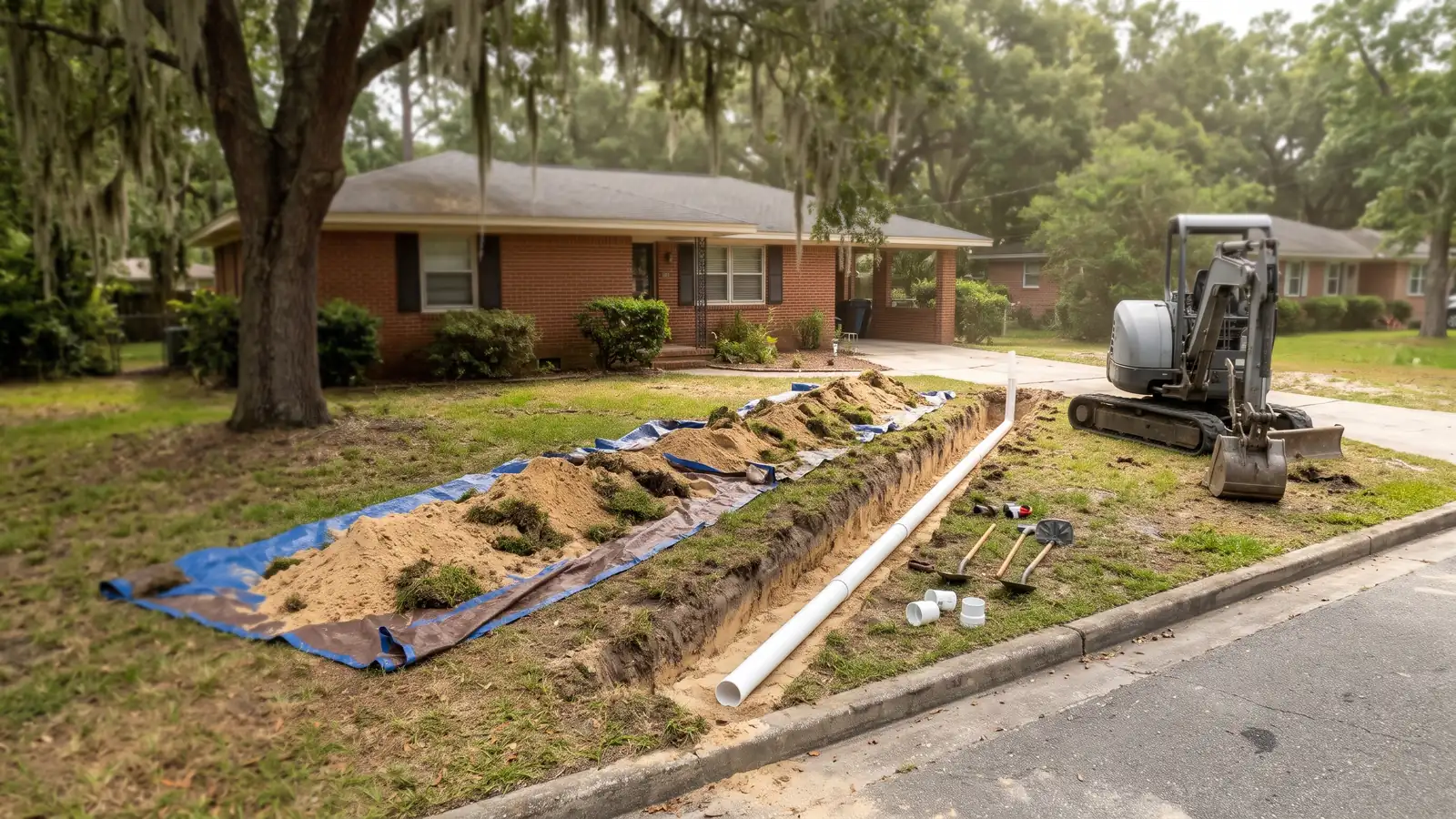
Sewer Line Spot Repair Methods
This Old House says targeted repairs make sense when the problem is small and localized and the rest of the pipe is in good condition. Each method below fixes one place in the line and leaves the rest alone, so the camera video has to show that the rest really is sound.
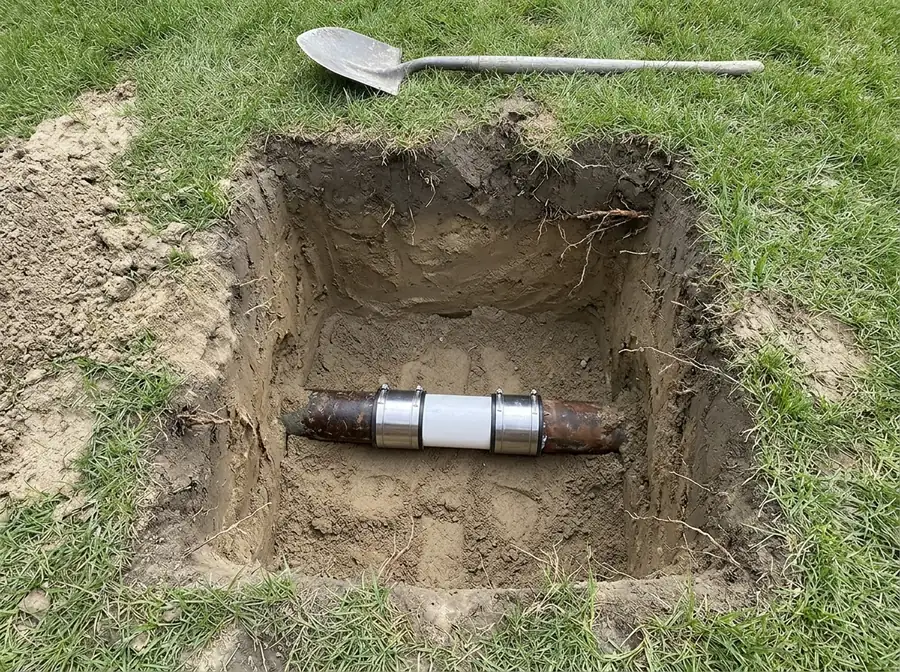
Dig One Pit and Couple In New Pipe
The plumber digs down at the marked spot, cuts out the cracked joint or broken length and couples a new piece in. Where new pipe meets old pipe of a different material, the 2021 plumbing code Mobile uses requires a mechanical compression or sealing coupling made to ASTM C1173, C1460 or C1461. The pit floor then needs continuous, solid support under the pipe between joints, and the backfill goes in 6-inch tamped layers.
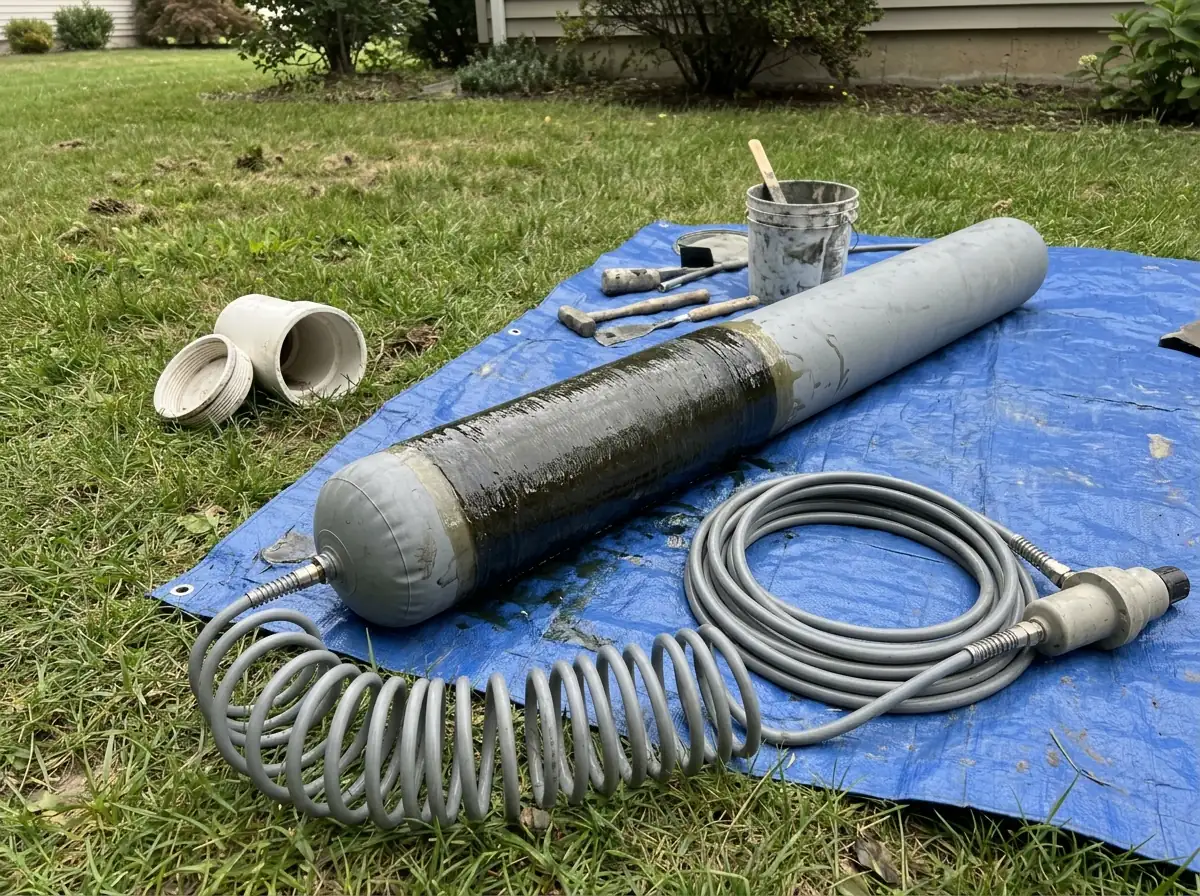
Sectional Point Liner Without Digging
A short sleeve of cured-in-place liner is set at the defect from inside the pipe and cured against the wall. HomeAdvisor describes this kind of "sewer sleeve" as a CIPP liner, saturated with epoxy, that seals cracked or damaged sections without excavation. Because the liner takes the shape of the pipe it sits in, it suits a crack or open joint, not a crushed or sagging spot, and any roots have to be cleared first. The national cost guides cited on this site don't price a point liner on its own, so ask for it as a separate line on the quote. Full-length lining is on cured-in-place pipe lining.
Replacing One Run Between Cleanouts
When the defects are bunched in one stretch, the fix can be a partial replacement of that run: from the house to the building cleanout, or from there to the property-line cleanout. Where cleanouts are missing, the sewer cleanout installation page covers what the code asks for.
When a Spot Repair Is the Wrong Buy
On a line that is failing along its whole length, MAWSS warns that a partial repair can lead to repairs on other parts of the lateral in later years. It says that on old clay, cast iron or concrete laterals a partial repair "may only be a band-aid approach", recommends replacing the whole lateral, and won't finance spot repairs through its own program. This Old House agrees that widespread or recurring problems, or problems caused by aging material, usually make replacement the better long-term buy.
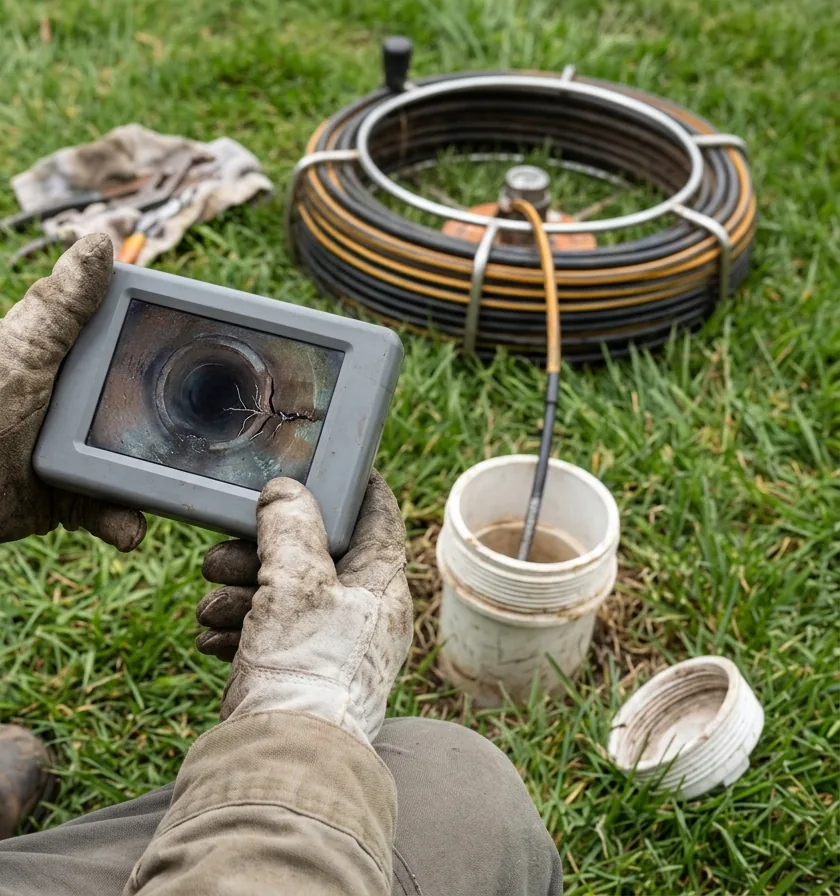
Why Mobile homeowners, landlords and businesses call Mobile Sewer Line Replacement
- One licensed plumber gets the request, not a bidding list
- No charge to you for the introduction
- Ask to keep the camera video from before and after
- Alabama plumbing licenses can be checked online
Questions to Ask Before Paying for a Spot Repair
How many defects did the camera find, and where?
Ask for footage marks for each one. One crack in sound pipe is a spot repair; a crack every few joints is not. The sewer camera inspection page covers the video.Will the repair satisfy a MAWSS defect letter?
MAWSS wants the lateral repaired to the extent needed to stop rain and groundwater getting in, and may re-test it. The deadlines are on sewer line repair.Is a permit included?
Mobile's code treats cutting out defective drain pipe and replacing it with new material as new work that needs a permit and inspection; see trenchless sewer line replacement for the permit office.Which coupling and which pipe?
Ask what joins new to old at each end and what the replacement piece is made of.