
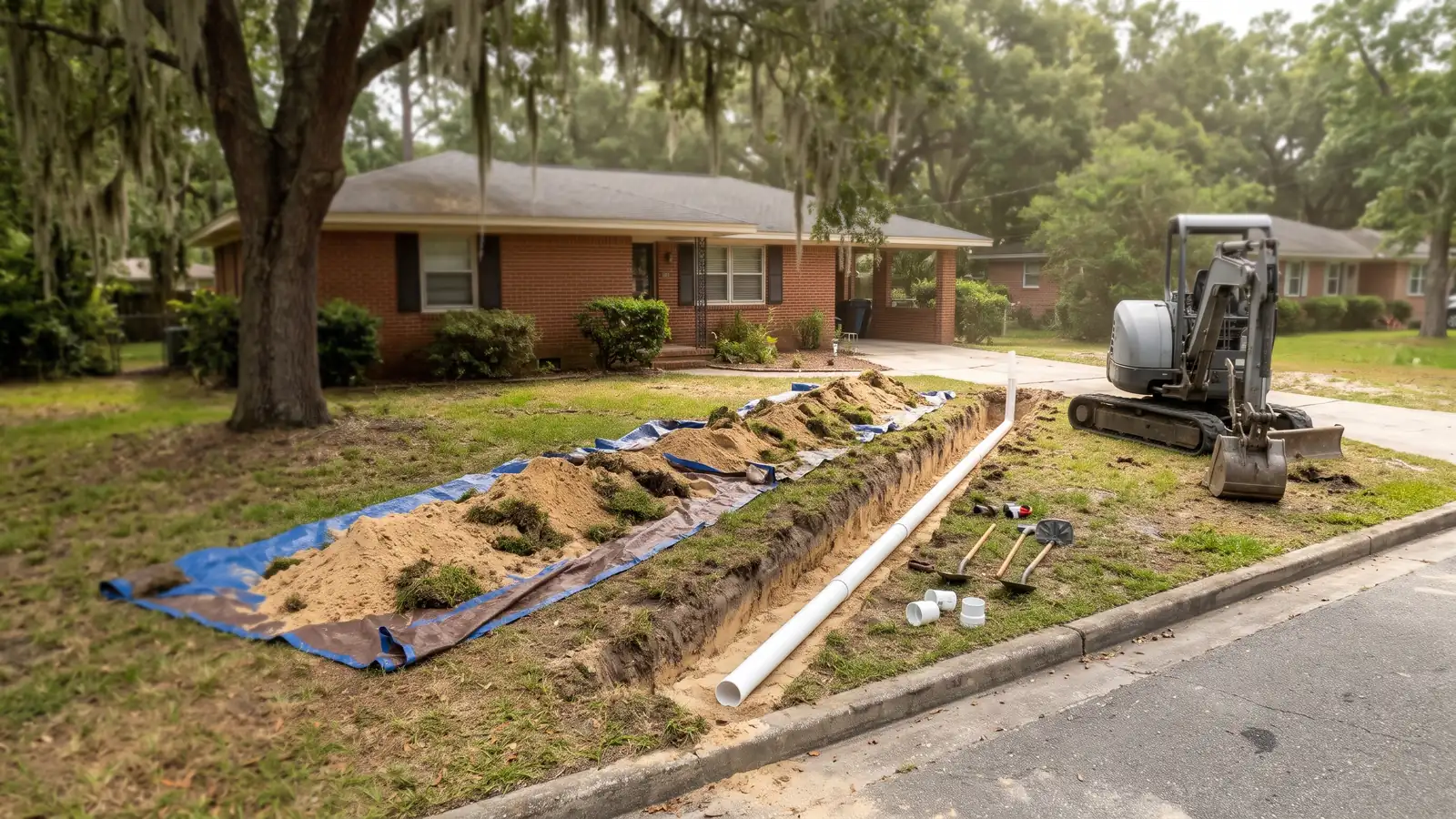
Sewer Line Hydro Jetting Before and After a Repair
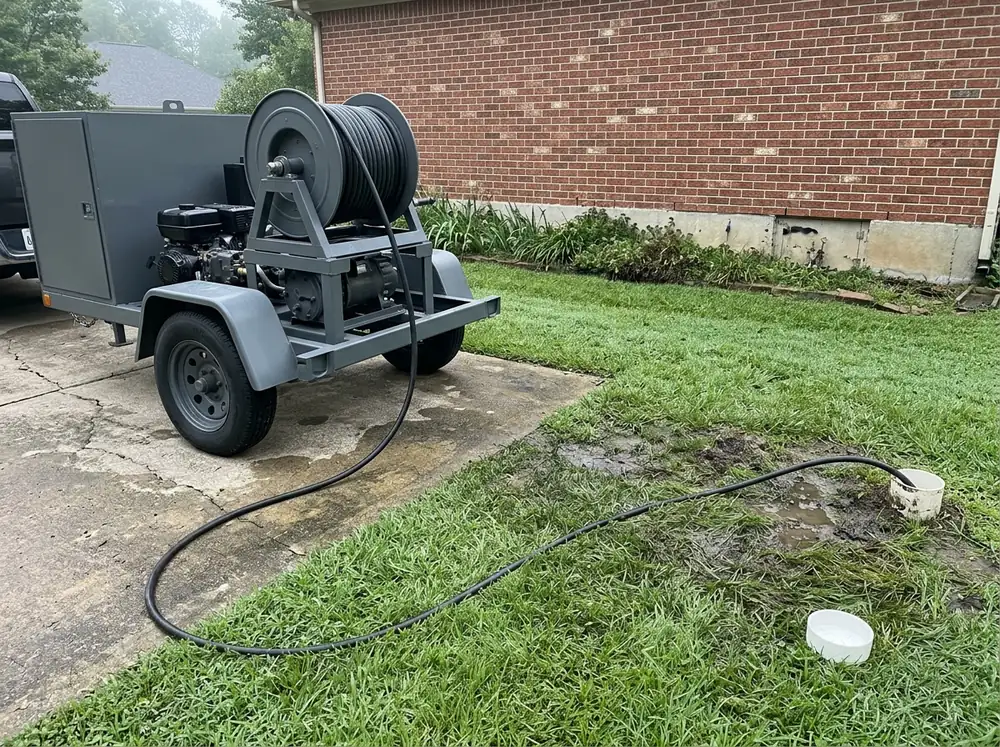
Cleaning a Lateral Before It Is Lined
A liner has to go into a clean pipe. Utility specifications for lining sewer mains set the order: clean the pipe hydraulically, film it, remove obstructions, then line it, and film it again after. Before lining, the video has to show the pipe free of roots, grease, sand, rocks and sludge. Lining itself is covered on the cured-in-place pipe lining page.
Cutting Roots Out of Clay Joints
For heavy root intrusion, a jetter-parts supplier's nozzle guide points to a chain cutter or root saw, which cuts the roots mechanically while the water flushes them downstream. HomeGuide notes that roots need higher pressure and longer cleaning time than soft clogs. MAWSS's warning applies here too: owners often pay to cut roots out of a lateral repeatedly and still end up replacing it. The longer-term fixes are on the tree root repair page.
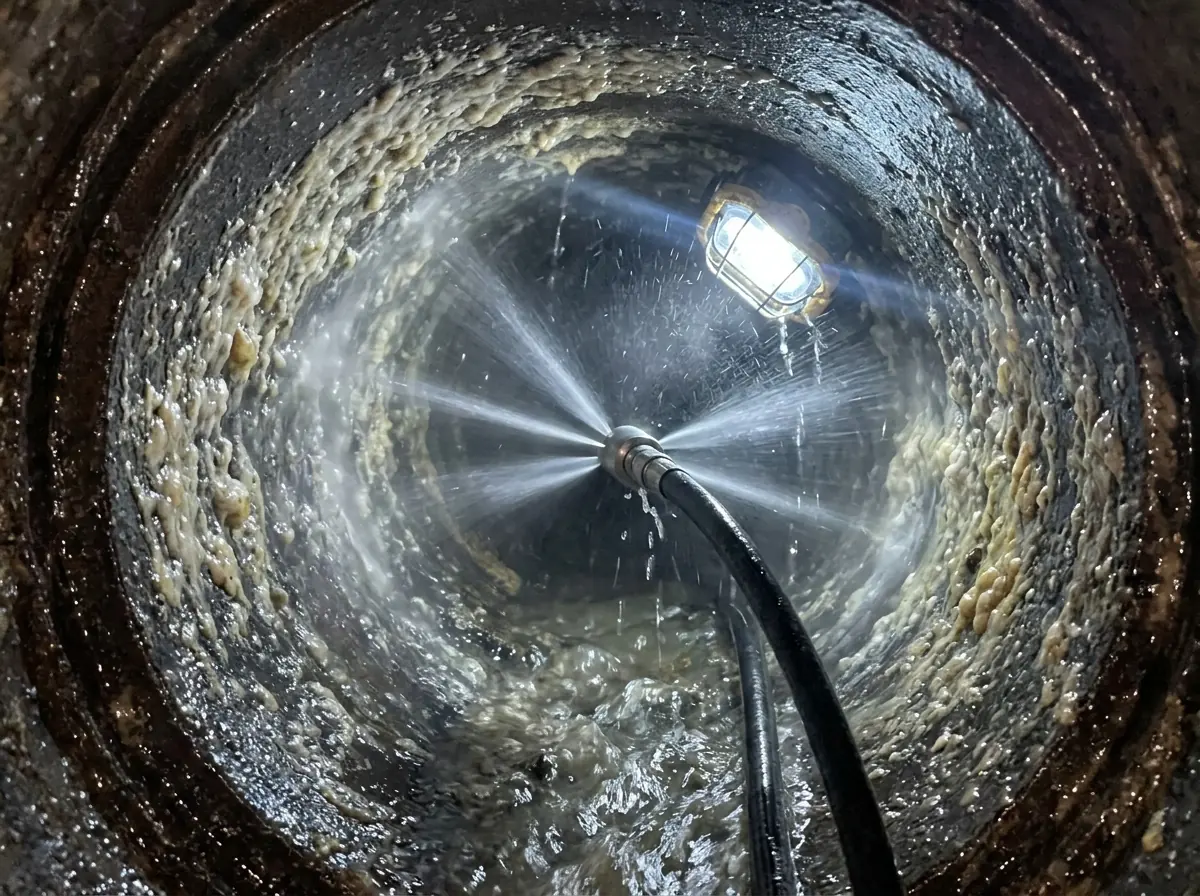
Grease Film and Scale Lining the Pipe
Grease coats the pipe and narrows it; a cable punches a hole through and leaves the coating behind. The nozzle guide matches residential grease to a rotating or penetrating nozzle that scours the wall. MAWSS asks customers never to pour fat, oil or grease down the drain, and on a restaurant line Mobile's code requires a grease interceptor (commercial lines).
Opening a Full Stoppage
When nothing drains, the first job is flow. Forward-facing jets cut into the blockage while rear jets push the hose ahead. Once the line runs, a camera pass shows whether the stoppage was debris or a break that will come back.
Jetting an Old Clay or Orangeburg Lateral
HomeGuide says modern PVC and cast iron handle jetting well, while older clay or Orangeburg pipe may be more easily damaged, and pipes over 40 years old or showing deterioration may not be good candidates. MAWSS says about three-quarters of the private laterals in its program description were built before 1976, so most are well past 40. Ask for a camera look before full pressure goes in, and lower pressure on fragile sections. If the pipe is coming apart, jetting is the wrong fix; see Orangeburg pipe replacement and clay sewer pipe replacement.
Why Mobile homeowners, landlords and businesses call Mobile Sewer Line Replacement
- One licensed plumber gets the request, not a bidding list
- No charge to you for the introduction
- Ask to keep the camera video from before and after
- Alabama plumbing licenses can be checked online
Hydro Jetting Cost and What Moves It
Beyond the typical range above, HomeGuide's national figures run from a $300 minimum to a $3,000 maximum. What moves the price, by the same guide:
What's in the pipe
Roots, hardened grease and mineral scale take more pressure and time than soft clogs.Access
A cleanout installation lowers the cost of every later visit.Pipe condition
Damaged pipe may need gentler pressure, more inspection time, or a repair before or after.
For comparison, HomeGuide prices snaking a sewer line at $200 to $500. A cable clears an opening, while jetting cleans the full wall, which is why HomeGuide says jetting lasts longer between visits.
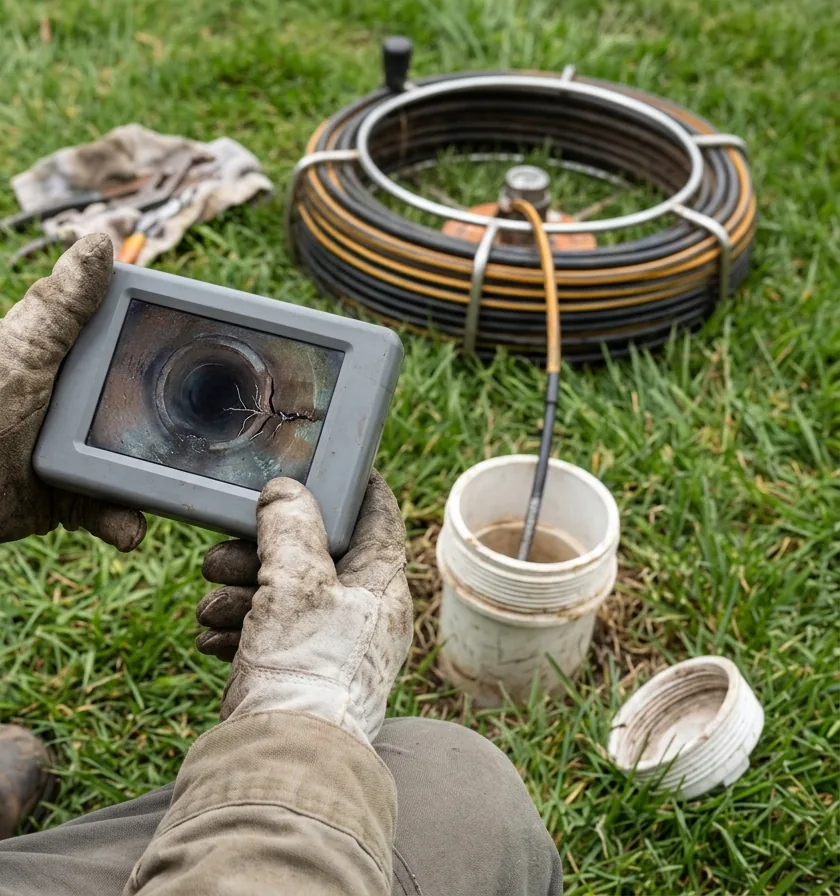
Jet, Then Film
A jetted line is the best time to see the pipe. Ask for a camera run right after jetting, with the video file, so you can see cracks, offsets and bellies that the buildup was hiding. If the plumber filmed before jetting, ask for both videos. Camera prices and what the fee covers are on the sewer camera inspection page.