
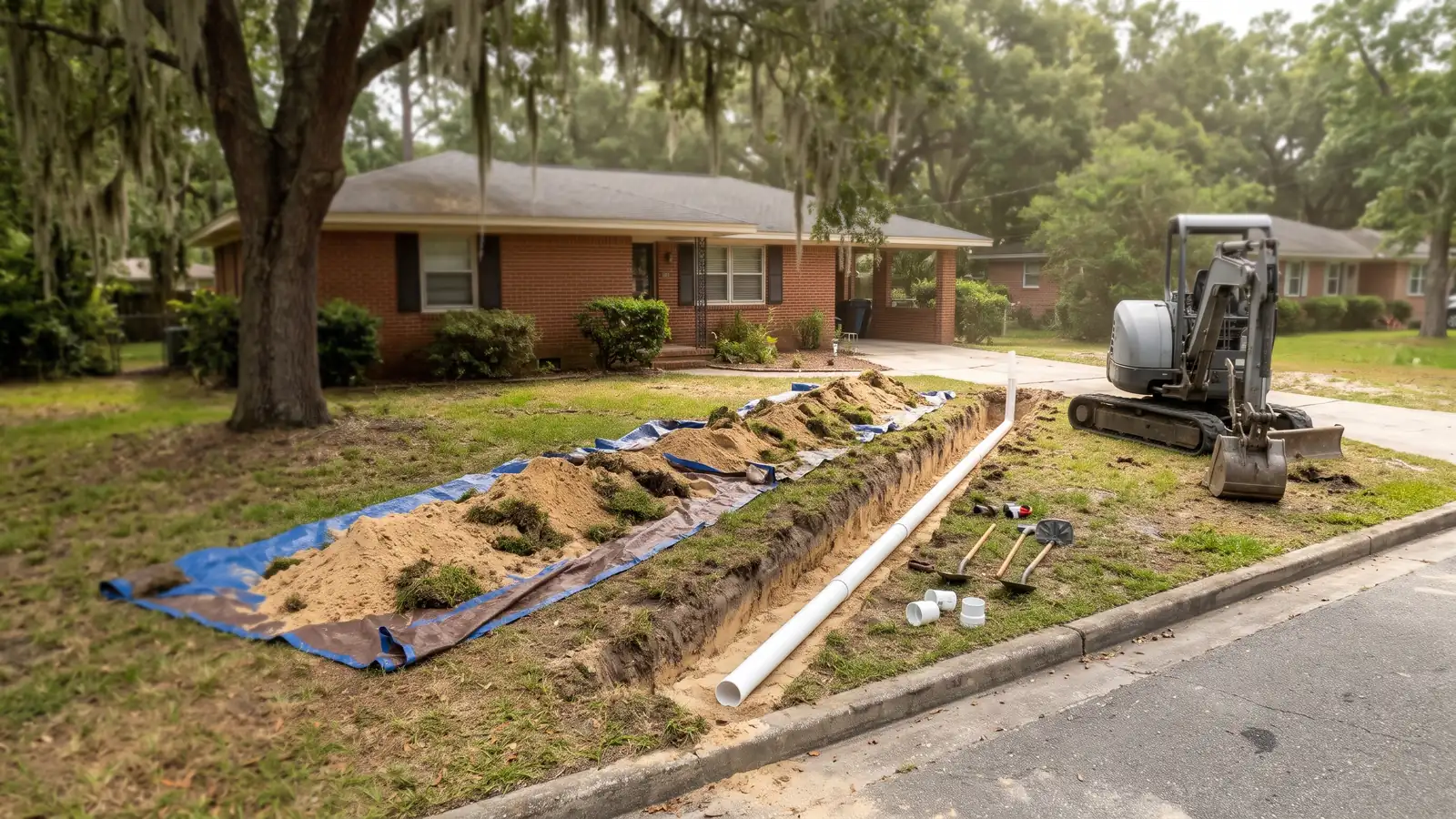
Pipe Bursting Methods for Sewer Laterals
Bursting replaces the old pipe along its own path. A head bigger than the old pipe is pulled or driven through it, the old pipe breaks into pieces that are pushed into the soil, and new pipe follows right behind.
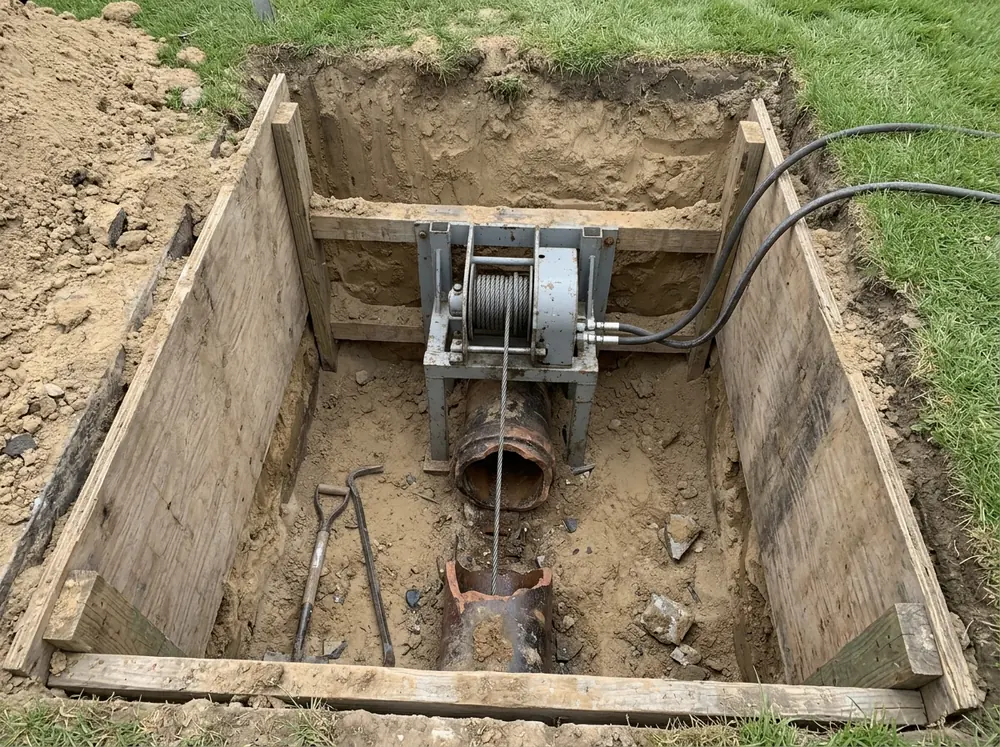
Static Bursting with a Hydraulic Rod or Cable Rig
A static rig sits in one pit and pulls. The UK Society for Trenchless Technology describes the rod version: steel rods are pushed through the old line, a steel expander cone is fixed to the lead rod, and the rig draws the cone and new pipe back through. Cable-based static rigs do the same with a wire cable. They're meant for small pipe over short distances and fit in small pits, and a trade-journal guide to lateral bursting uses one on house laterals.
- Pipe size for the lateral cable rig in that guide: 2 to 6 inches.
- Most lateral runs, by the guide's account: 20 to 80 feet.
Pneumatic Bursting
A pneumatic tool is an air-driven impact hammer with an expansion sleeve, drawn through the old pipe by a winch cable. The hammering cracks the pipe and drives the pieces outward, and the cable keeps the tool on the line of the old bore. The society notes it works best in soft, compressible ground and finds hard clays and dry, well-graded sands the toughest. Ask which method is planned for your line and why.
Same-Size Replacement Under the Code
Bursting rigs can upsize pipe in general, but the 2021 plumbing code Mobile adopted doesn't allow it for a building sewer. The replacement must match the existing nominal size, and nothing over 6 inches qualifies. MAWSS says a lateral is usually 4 or 6 inches, and Mobile allows no building sewer under 4 inches, so a 4-inch line comes back as 4-inch HDPE.
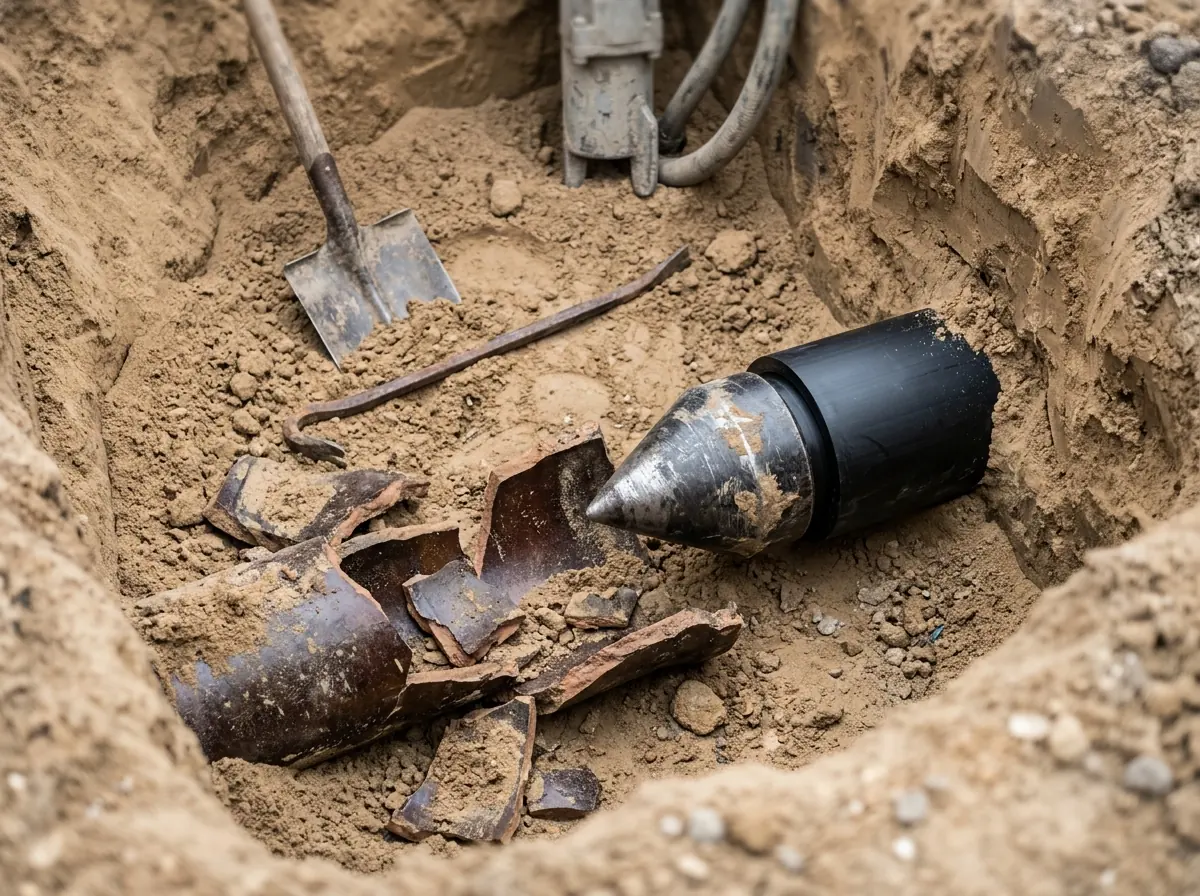
Clay, Cast Iron and Old Repair Collars
Bursting depends on the old pipe being brittle. The society lists cast iron and vitrified clay among the materials suited to it; steel and ductile iron need special splitting gear. Collars from earlier repairs don't fracture the same way, so heads can carry cutting blades to slice through them. The broken pieces can scratch the outside of polyethylene pipe as it passes, which is why wall thickness matters. The code fixes it at SDR 17. For fiber pipe, see Orangeburg pipe replacement.
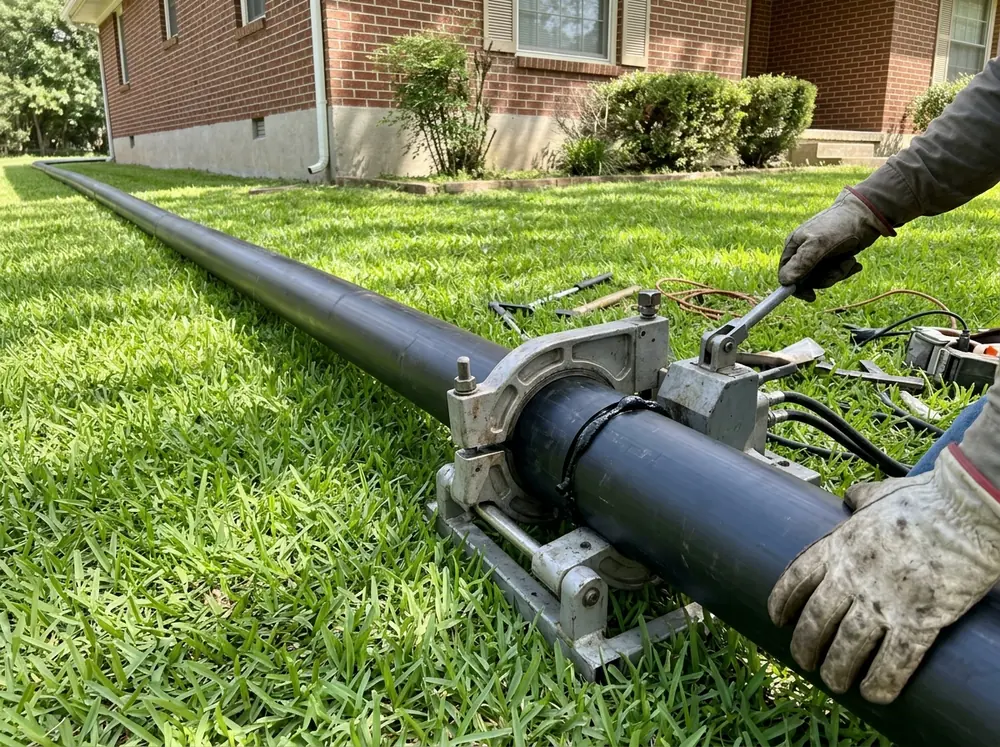
Fused HDPE Pulled in One Length or in Sections
The new pipe is high-density polyethylene made to ASTM F714, a standard written partly for inserting new pipe into old sewers. Lengths are joined by heat fusion under ASTM F2620, which covers butt fusion. A string fused to full length on the lawn can be pulled in one go; otherwise the crew stops at set lengths to fuse the next piece. Fittings on the new line have to be HDPE too, made to ASTM D2683.
Why Mobile homeowners, landlords and businesses call Mobile Sewer Line Replacement
- One licensed plumber gets the request, not a bidding list
- No charge to you for the introduction
- Ask to keep the camera video from before and after
- Alabama plumbing licenses can be checked online
Pipe Bursting Limits: What It Won't Fix
A low spot
Angi says trenchless methods aren't suitable for pipe with improper sloping. See sewer line belly repair.Bends
The trade-journal guide says bends of 22, 45 or 90 degrees have to be known before the job is set up. Ask how each bend on your video will be handled.A collapsed run
HomeAdvisor says trenchless replacement is sometimes unavailable when the pipe has completely collapsed; see trenchless sewer line replacement.
Bursting replaces the pipe; lining builds a new one inside it. For a line that has kept its shape, compare cured-in-place pipe lining.
Pipe Bursting Code Steps in Mobile
Mobile's plumbing code is the 2021 International Plumbing Code with local amendments, and its bursting section sets the order of work:
- 1
Video before
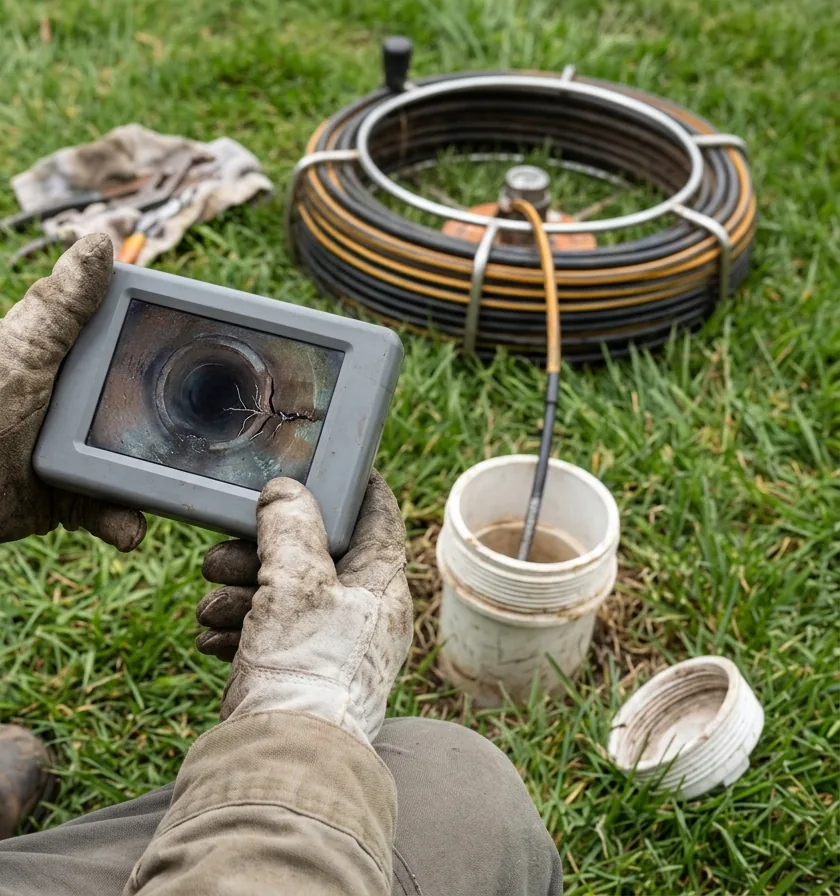
The old line is filmed on a recorded survey that notes where the cleanouts are and how deep the connections sit. - 2
Cleanouts
If the old line lacked the cleanouts the code requires, they go in with the new pipe; see sewer cleanout installation. - 3
Video after
The new pipe is filmed again, and the code official reviews that video before the pressure test. - 4
Test
The new pipe and its connections are tested under the code's test section; Mobile's inspector may call for a gravity test with a 5-foot head of water held for 15 minutes.
Ask for both videos as files you keep, and ask whether the price covers both pits, any new cleanouts and putting the lawn back. If a MAWSS defect letter started the job, the invoice, permit and inspection approval go to MAWSS as proof; sewer line repair lists what it asks for.