
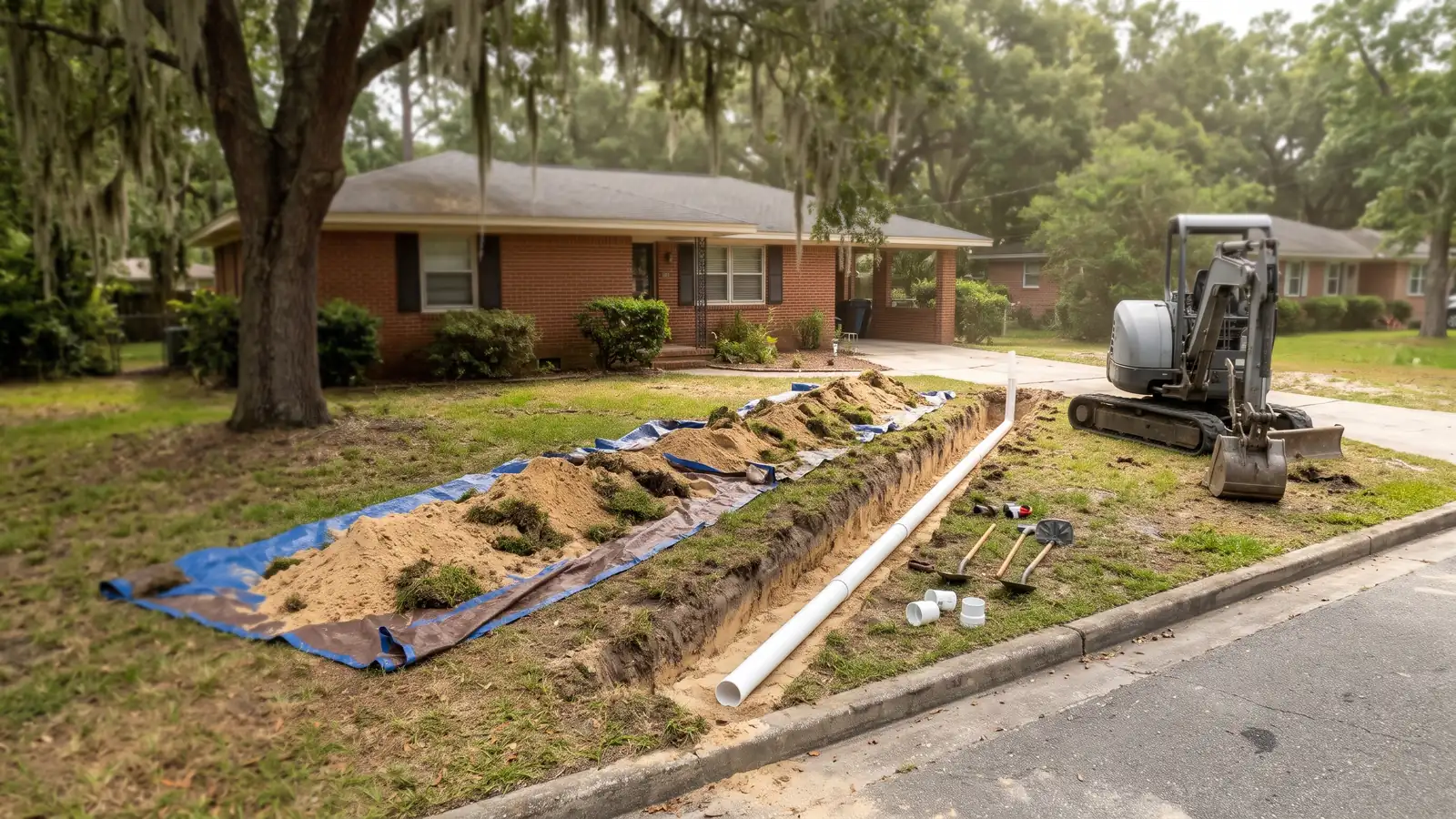
Clay Sewer Pipe Failures and the Fix for Each
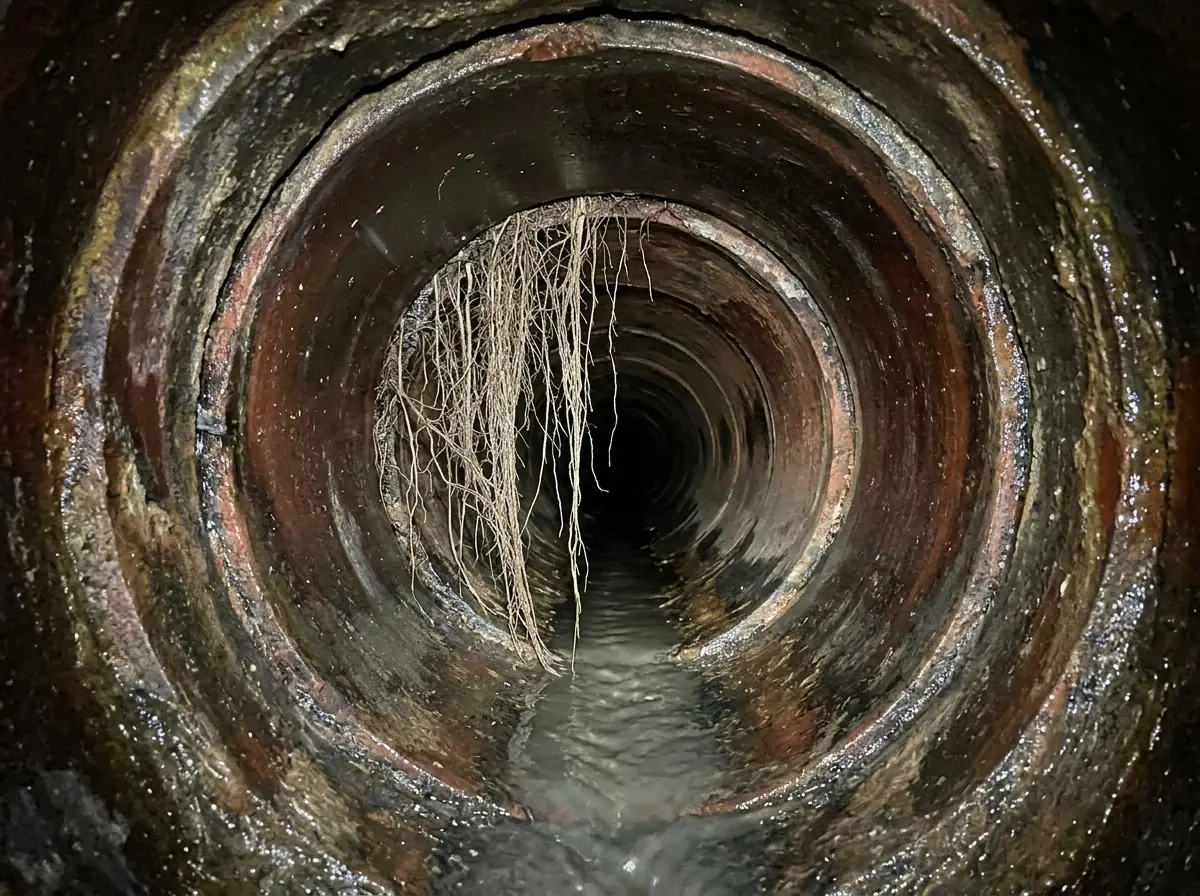
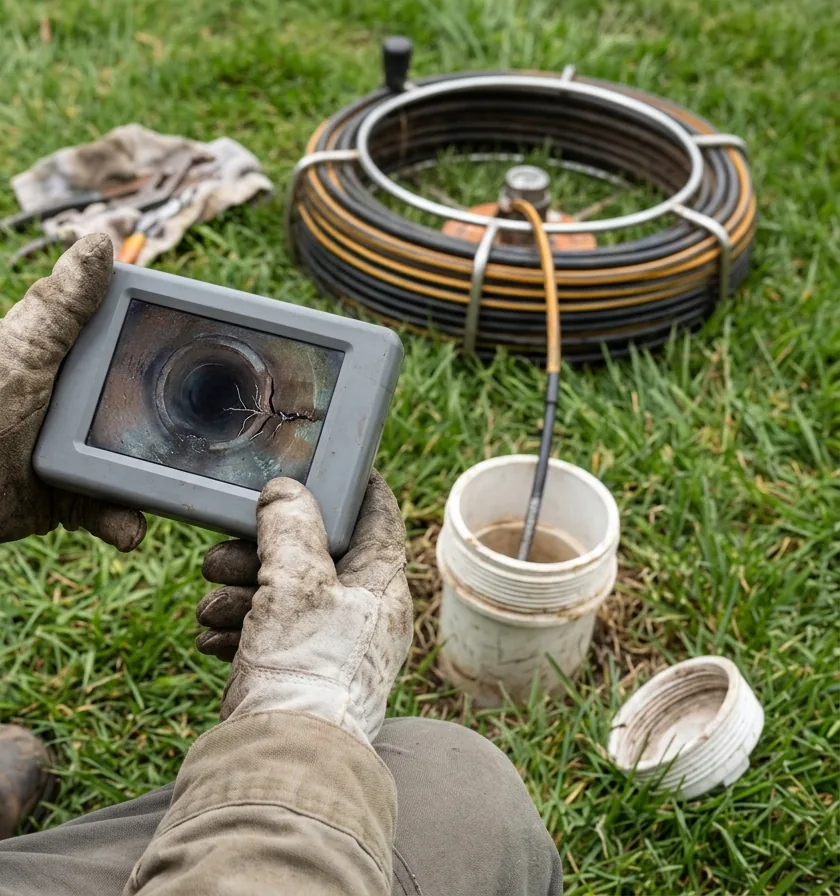
MAWSS describes how its clay laterals fail in one sequence: the joints let go, roots and groundwater get in, the roots pry the joints wider, and as the pipe settles the joints separate and the clay cracks. A camera run shows which stage your line has reached, and that decides the repair.
Roots Growing Through Clay Joints
A federal root-control training manual lists clay tile sewers with oakum-packed joints among the pipes most open to roots, and rubber-gasketed pipe among the least. Cutting the roots out clears the line, but the same manual says mechanical cutting leaves no lasting control and that roots grow back heavier each time they are cut. See tree root sewer line repair for the options past cutting.
Cracked Pipe and Broken Bells
A crack along one length, or a bell end broken off at the joint, is a structural defect rather than a clog. MAWSS's lateral diagram labels "breaks, cracks, holes" as one of the defects its tests look for. If the rest of the run films clean, one section can be cut out and coupled in new pipe; the sewer line spot repair page covers how and what it costs.
Offset and Separated Joints
Settling ground pushes one length of clay out of line with the next and opens a gap at the joint. MAWSS says laterals with roots, cracks or separated joints are not watertight, which is what its smoke and camera tests are hunting for. Under the 2021 plumbing code Mobile uses, new clay joints have to be made with an elastomeric seal, unlike the oakum-packed joints of older clay sewers.
Clay Sections That Have Partly Collapsed
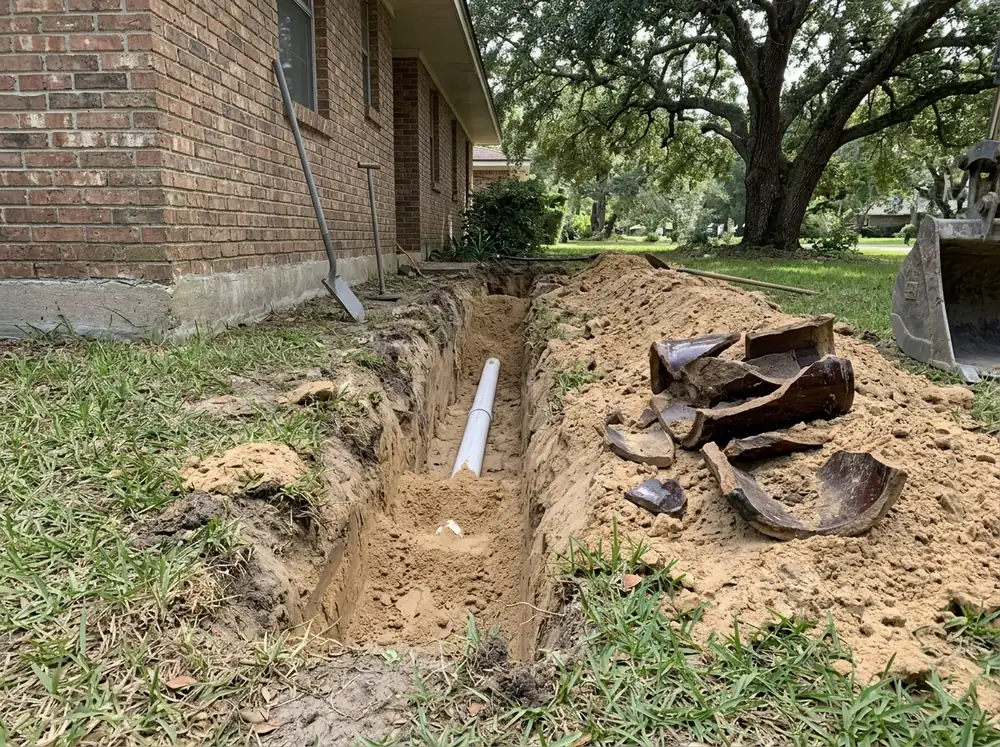
A section where the pipe wall has fallen in has collapsed, at least partly. Cost guides say trenchless methods aren't suitable for a collapsed pipe, so that stretch gets dug up. The collapsed sewer line repair page covers what to do while you wait.
Lining a Clay Run or Replacing It
A liner can seal the joints of a clay line that still holds its shape. The roots have to be removed before it goes in, and because a cured-in-place liner takes the shape of the host pipe, offsets and broken bells stay in the new wall. Pipe bursting splits the clay and pulls new pipe through. MAWSS, writing from its experience with older homes, says a partial repair on old clay "may only be a band-aid approach" and recommends replacing old laterals entirely. Compare cured-in-place lining and pipe bursting before choosing.
Why Mobile homeowners, landlords and businesses call Mobile Sewer Line Replacement
- One licensed plumber gets the request, not a bidding list
- No charge to you for the introduction
- Ask to keep the camera video from before and after
- Alabama plumbing licenses can be checked online
Why So Many Mobile Laterals Are Clay
MAWSS's private lateral program describes its customers' older laterals as mostly vitrified clay. Census figures put the median Mobile home's construction year at 1976. A typical lateral here runs 50 to 150 feet, so a line laid in 3- to 5-foot lengths can have 10 to 50 joints between the house and the street.
HomeGuide's range for PVC, cast iron and copper is 50 to 100 years, and it notes that soil and nearby tree roots shorten the range.
What to Ask Before Paying for Clay Pipe Work
Ask for the camera video with footage marks
at each defect, so you can see whether the trouble is one joint or every joint. The sewer camera inspection page explains the run.Ask what the new pipe will be
Mobile's code doesn't allow ABS for a building sewer, and PVC sewer pipe to ASTM D3034 is on the approved list.Ask whether the quote stops at a cleanout or runs to MAWSS's side
Who owns which part is on the sewer line repair page.