
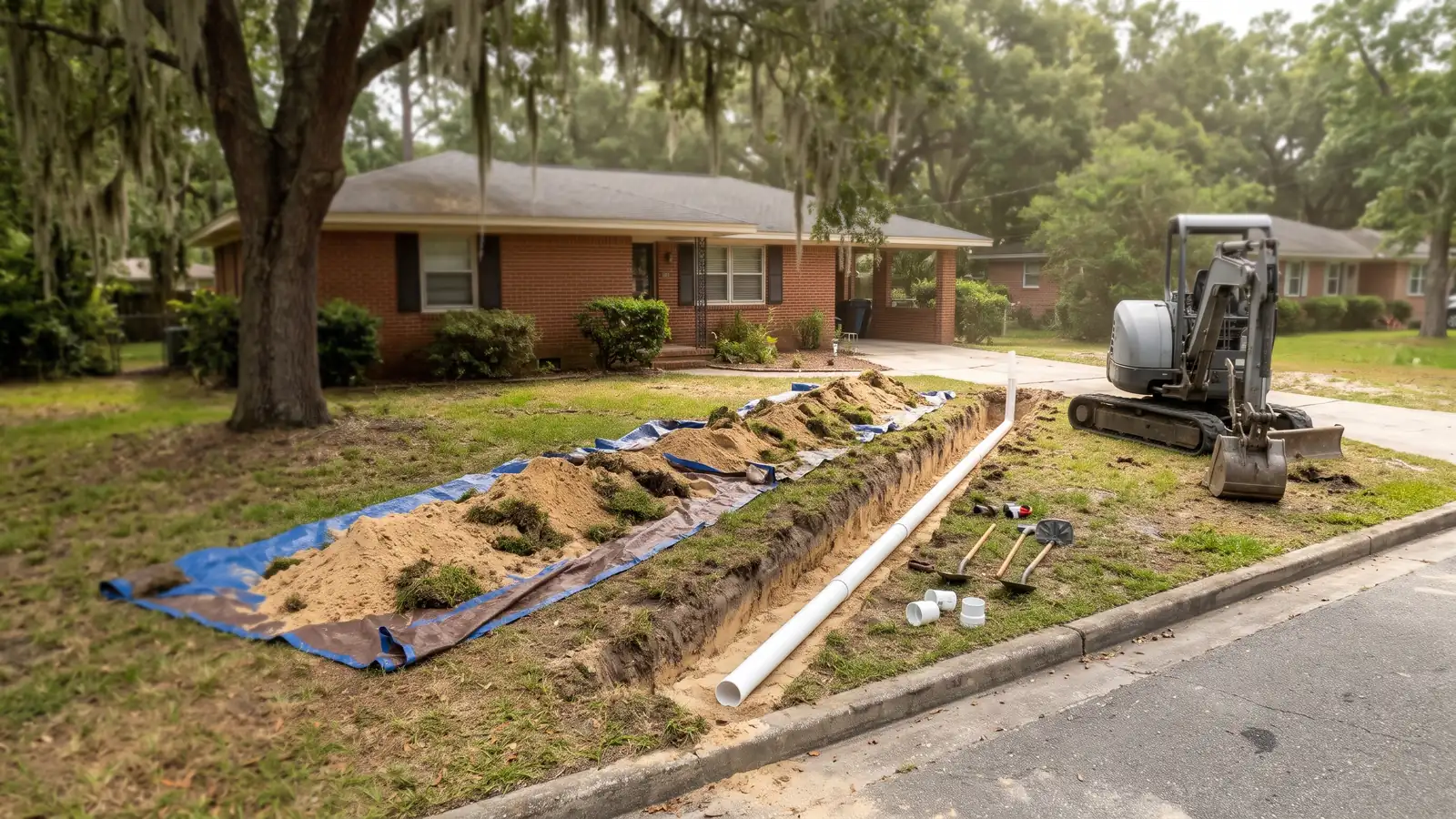
Orangeburg Pipe Failures, From Soft Walls to Collapse
Fiber pipe fails in its own way. It softens and flattens, often from the inside first, a pattern building officials describe as close to unique to this pipe. These are the conditions a camera run can show, roughly in the order they appear.
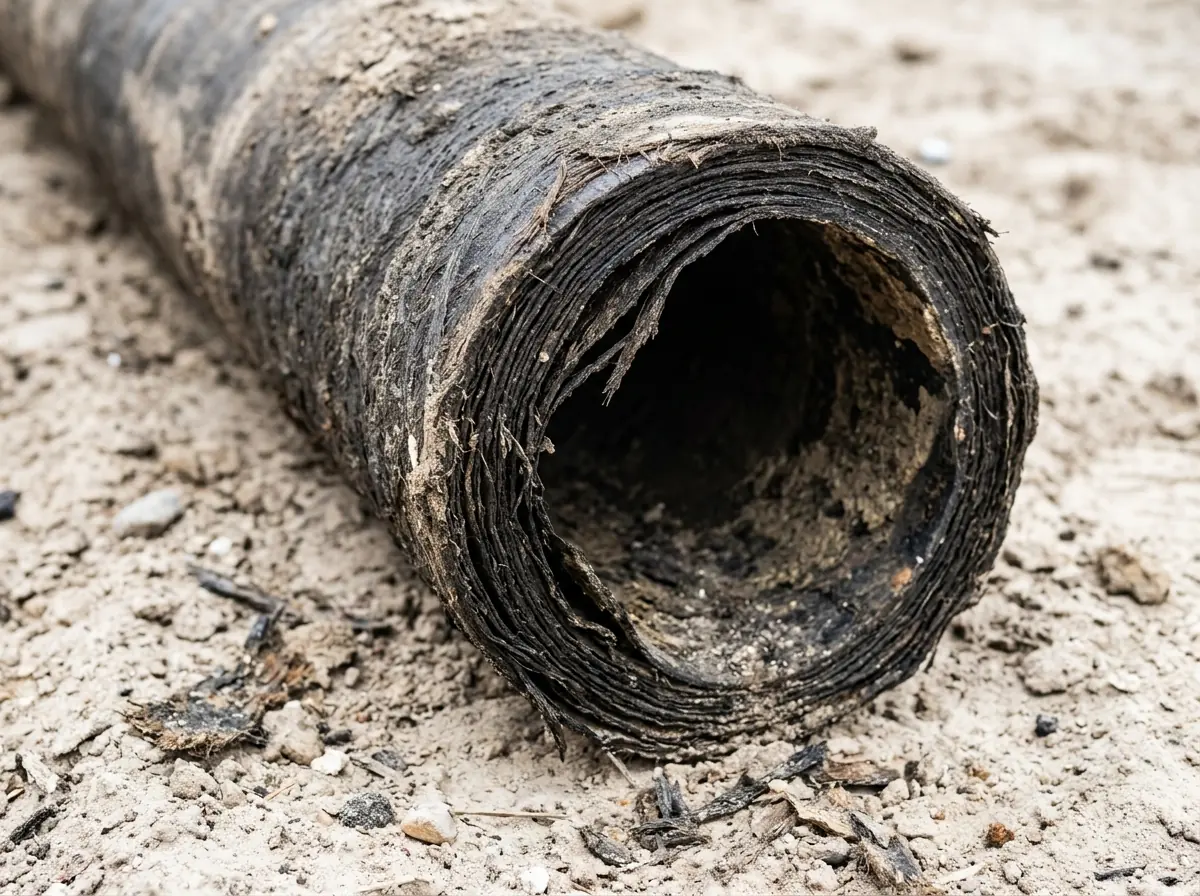
Layers Separating Inside the Wall
A 4-inch Orangeburg pipe can hold up to 25 layers of pitch-pressed wood pulp. The laminated kind fails from the inside: the inner layers give way first, the bottom of the pipe weakens and bows upward under soil pressure, and flow drops. Solvents, paint thinner and mineral spirits poured down a drain speed this up, because the pipe is held together with bitumen.
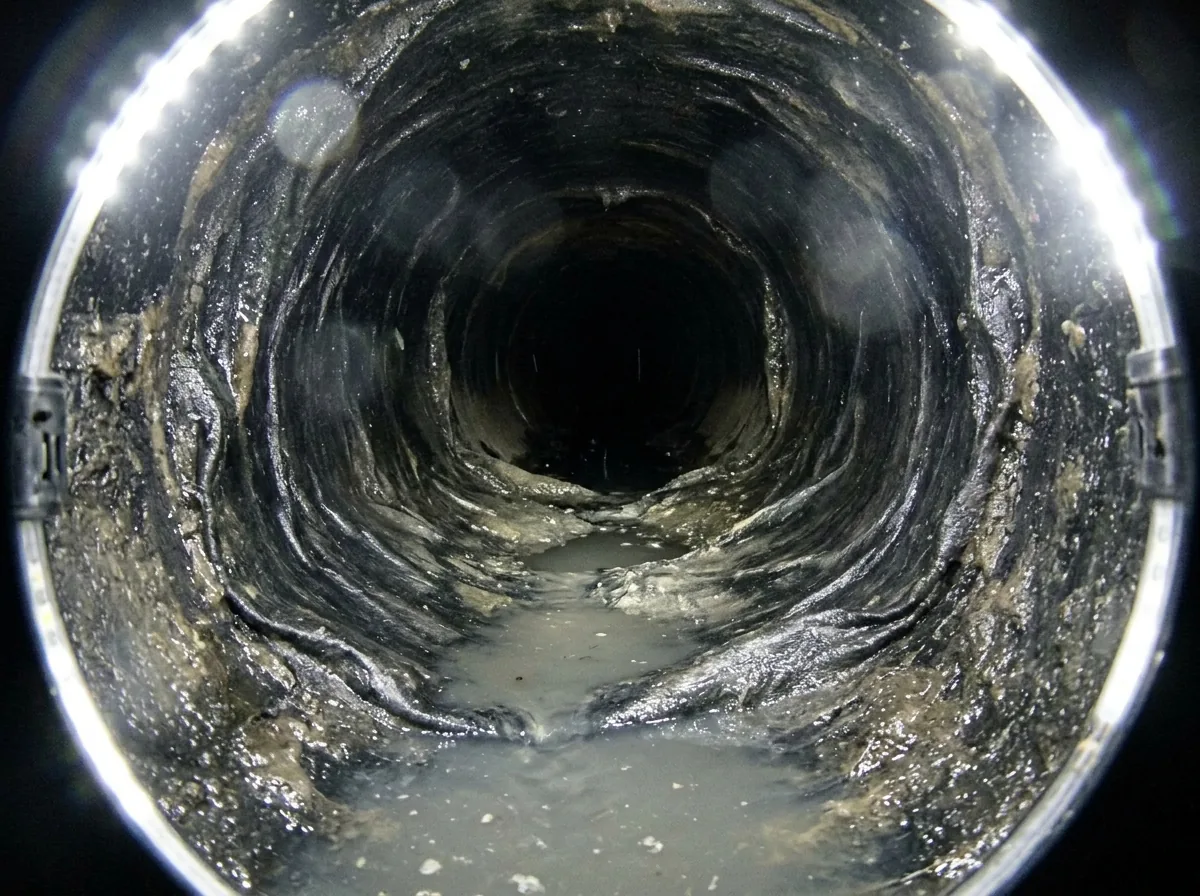
Egg-Shaped and Flattened Pipe
As the material breaks down, the weight of soil flattens it and the round cross section is lost, worst at the bottom where the waste flows. Inspectors have found fiber pipe that still looked round from outside while the inside was out of round and failing, so the camera, not a dig at one spot, is what tells you the shape of the whole run.
Roots Breaking Up the Joints
Roots enter fiber pipe at the joints and pry the sections apart. A federal sewer root-control manual lists Orangeburg among the pipes most open to roots, and a weakened pipe tears easily once roots are inside. Cutting roots out of fiber pipe carries the extra risk of damaging the wall, so see tree root sewer line repair for what else can be done.
Full Collapse of a Fiber Section
The end stage is a section that has flattened shut or broken apart, with repeated backups between the house and the street. Cost guides say trenchless methods aren't suitable for a collapsed pipe, so that part of the run is dug and replaced. If drains stop working entirely, start with collapsed sewer line repair.
Why a Liner Rarely Fits Orangeburg
A cured-in-place liner is inflated and cured against the old wall and takes the shape of the pipe it is in. In an oval or sagging fiber pipe that means an oval liner, and a liner also needs the roots removed first. Bursting avoids both problems: it breaks the old pipe outward and pulls new pipe in at the original size, with a pit at each end instead of a trench. The pipe bursting page covers the code rules for the new pipe.
Why Mobile homeowners, landlords and businesses call Mobile Sewer Line Replacement
- One licensed plumber gets the request, not a bidding list
- No charge to you for the introduction
- Ask to keep the camera video from before and after
- Alabama plumbing licenses can be checked online
Orangeburg Pipe History: What It Is and Why It Fails
Orangeburg is a brand name. The Orangeburg Manufacturing Co. of Orangeburg, New York, made bituminous fiber sewer pipe, and the name came to cover every maker's version. The pipe was layers of wood pulp pressed with tar, made to two ASTM standards: D1861 for solid-wall pipe and D1862 for the laminated kind. It was cheap, light and brittle, and soft enough to cut with a handsaw. Demand grew in the Second World War, when cast iron was short.
An encyclopedia entry dates its use from the 1860s through the 1970s, when PVC and ABS replaced it. A trade magazine reports that the namesake plant closed in the fall of 1972. HomeGuide gives Orangeburg and clay the same 30 to 60 years. According to the trade magazine, under the Uniform Plumbing Code that listed it, fiber pipe was approved only outside the house, never under a building, so in a house that has it, expect it in the yard run rather than under the floor.
MAWSS describes the older laterals in its system as mostly clay and gives no count for fiber pipe, so a camera run is the way to find out which you have. Ask for the video and for the footage marks where the pipe material changes; sewer camera inspection explains what the run includes.