
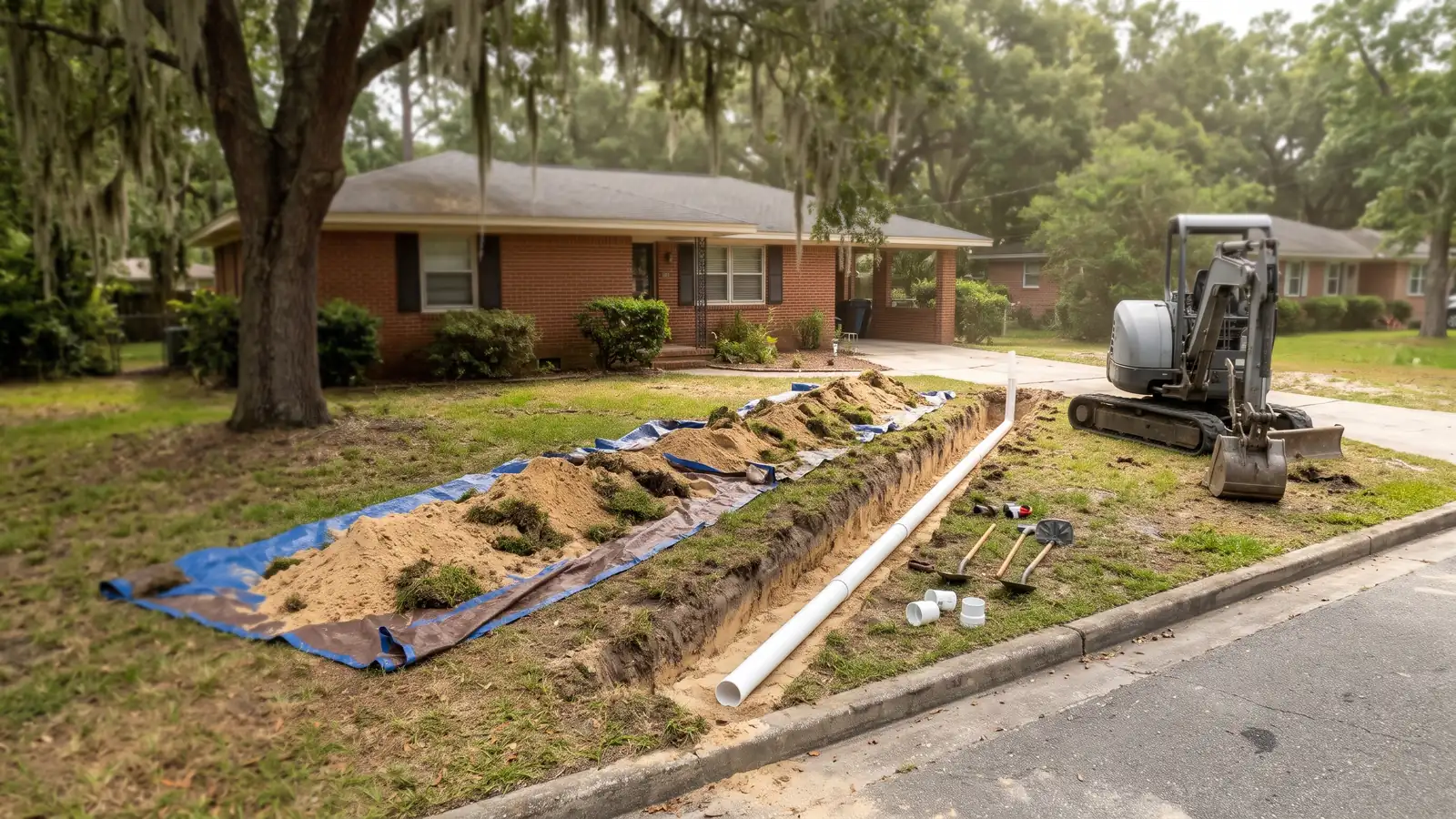
Collapsed Sewer Line Repair by Where and How the Line Failed
A collapse is a pipe that has broken in or caved under the soil above it, rather than one that is only blocked. The camera tells you which one you have; this is how the common cases are handled.
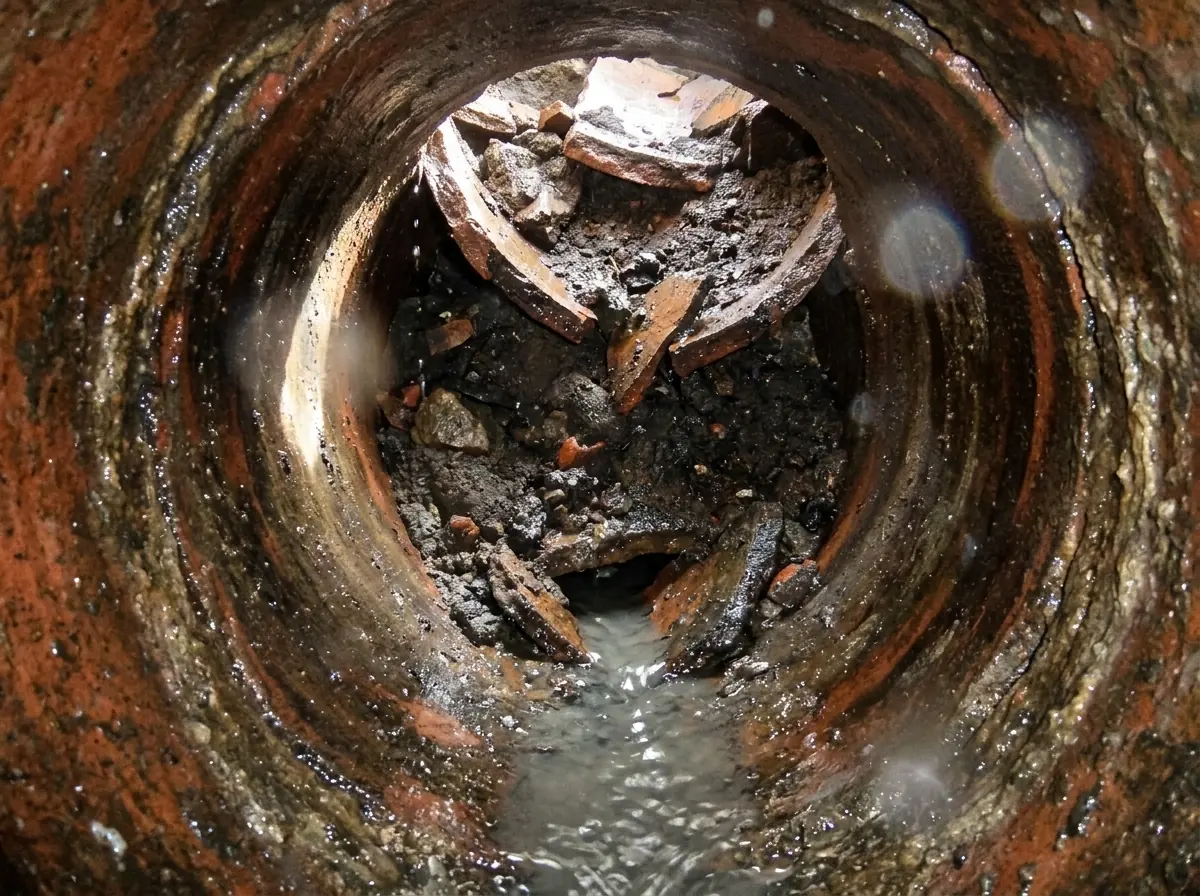
Partial Collapse With Backups That Keep Coming Back
HomeAdvisor lists persistent clogs and recurring backups among the warning signs of a failing line, and a camera run shows whether a partial collapse is behind them. HomeAdvisor's national guide puts replacement of the damaged portion at $50 to $250 a foot, and HomeGuide says partial replacements often run 1 to 15 feet.
Full Collapse With Nothing Draining
A fully collapsed stretch stops the house from draining at all. The broken length has to be reached by digging; HomeAdvisor prices that access at $400 to $1,200 per 100 linear feet.
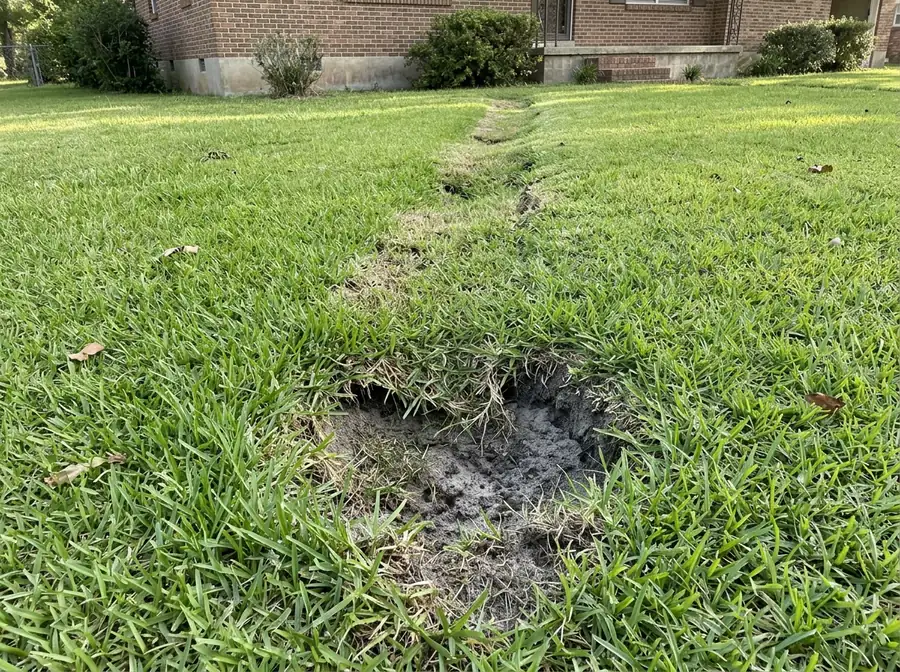
A Sinkhole or Soft Spot Over the Line
MAWSS says defective laterals can take in soil and open holes in the yard, and This Old House lists sunken areas along the sewer line as a sign of collapse. The hole marks where to dig, but not always how far the damage runs, so ask for the line to be filmed both ways from that point.
Collapse Under a Driveway or Slab
Bob Vila names frequent traffic overhead and heavy construction vehicles among the causes of collapse, a risk for any line under a driveway. Concrete adds removal and repair to the job: HomeGuide adds $3 to $8 a square foot to break out concrete. A collapse inside a slab house is covered on under-slab sewer line replacement.
Collapse at the Connection to MAWSS
A break near the curb or property line may sit on the owner's side or on MAWSS's. The sewer line repair page explains where the handover point is. MAWSS asks customers to report sewer problems to its 24-hour customer line at 251-694-3165.
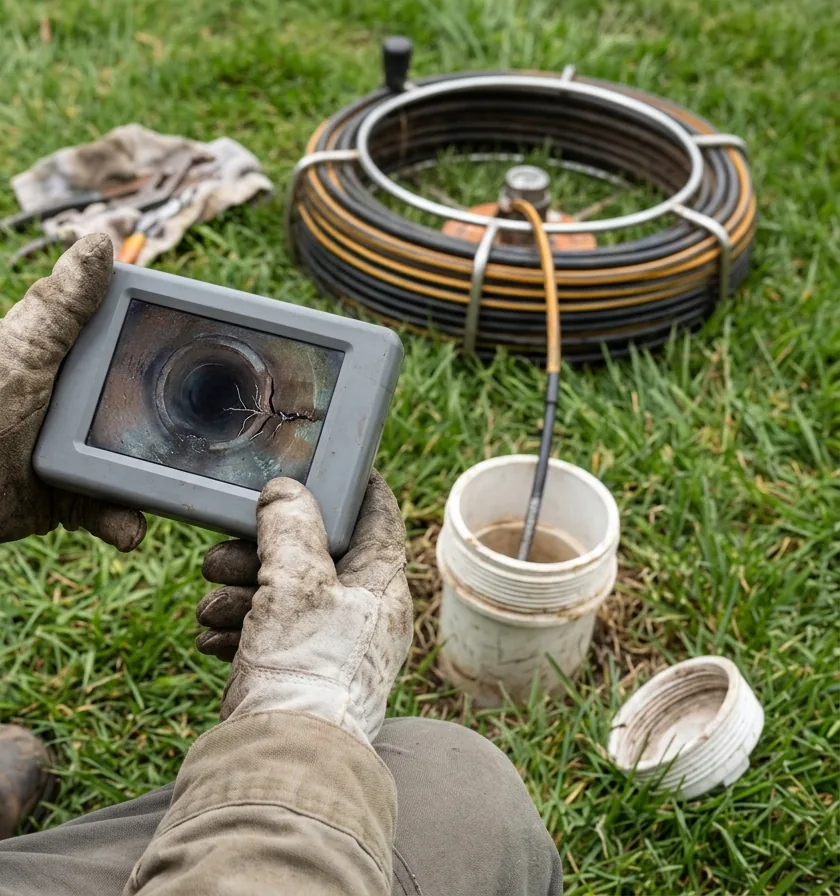
Why Mobile homeowners, landlords and businesses call Mobile Sewer Line Replacement
- One licensed plumber gets the request, not a bidding list
- No charge to you for the introduction
- Ask to keep the camera video from before and after
- Alabama plumbing licenses can be checked online
First Steps When You Suspect a Collapsed Sewer Line
- 1
Cut water use to a minimum
A sewer department's guidance uses this as the first test: if the backup stops when water use stops, the building's lateral is the likely blockage. - 2
Note which fixtures are affected
The same guidance asks owners to check whether it is one fixture or all or most of them; tell the plumber which. - 3
Leave the cleanout cap on
A loose or open cap can let sewage into the home when the line is blocked; MAWSS also asks owners to replace missing or broken caps. - 4
Report sewage coming from the street side
to MAWSS's 24-hour line. - 5
Ask for the camera video
before you agree to a method, with footage marks at the start and end of the collapsed stretch.
Backup damage and insurance are covered on sewer backup repair.