
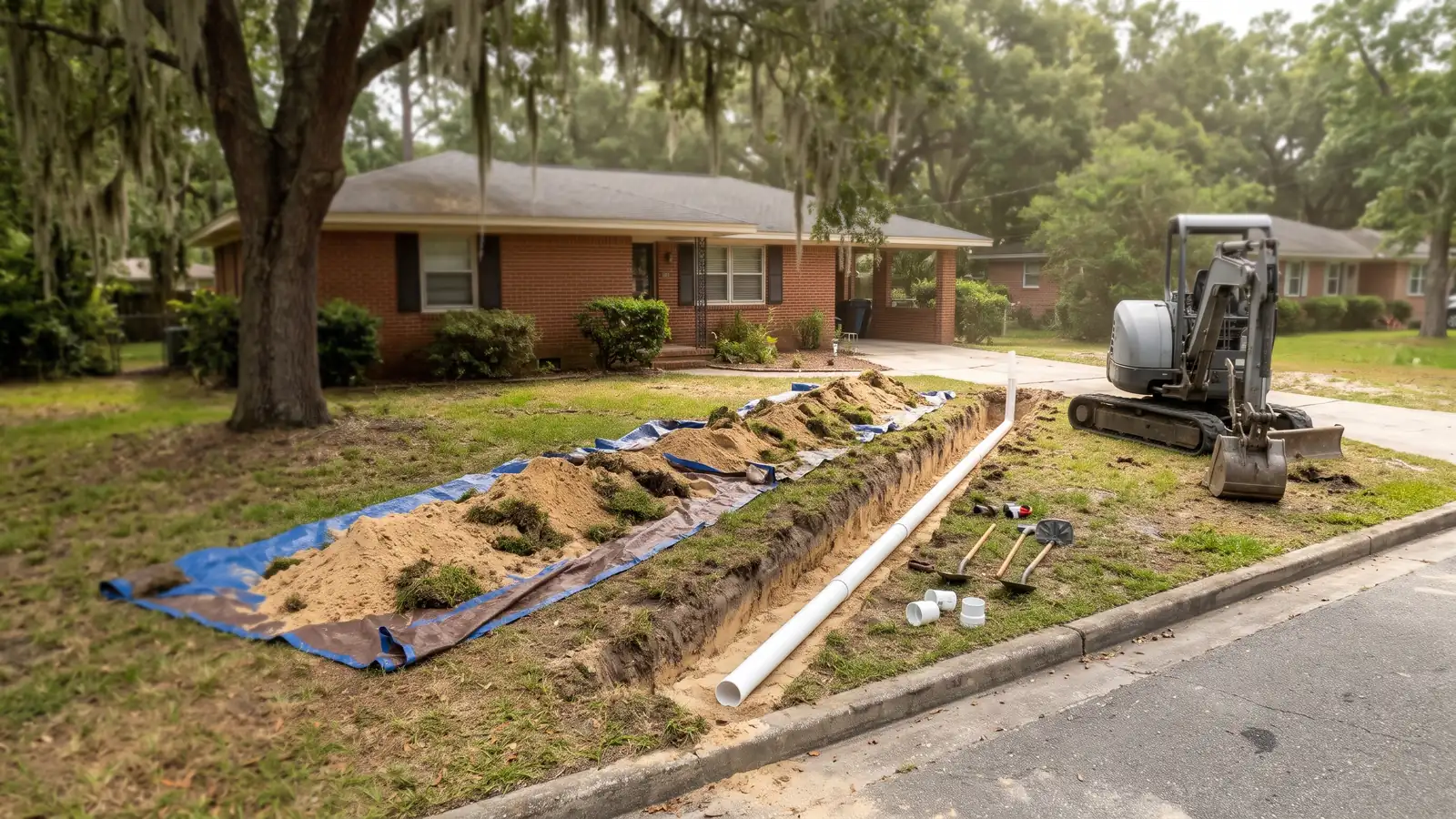
Cast Iron Sewer Pipe Problems and How Each Is Repaired
Iron sewer pipe loses metal as it corrodes, and over time that weakens the wall, opens cracks and loosens joints. The camera shows how much of the run is affected. That matters more to the bill than the pipe does: This Old House says labor and excavation usually make up the largest share of the price.
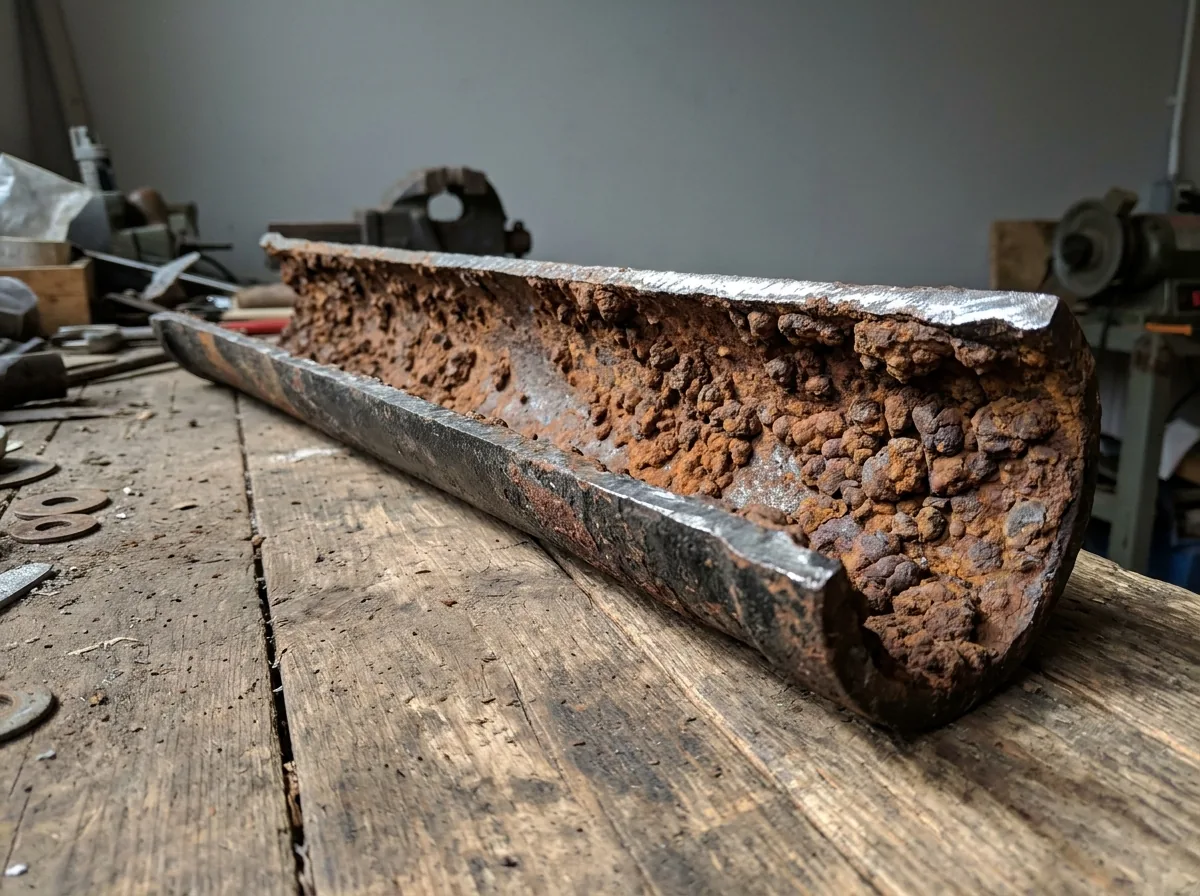
Corrosion and Scale Inside the Pipe
Cast iron corrodes on both its inner and outer surfaces. An encyclopedia entry, writing mainly about water pipe, says the buildup inside can narrow the bore, and that as more iron is lost the pipe's structure weakens. In sanitary sewers, hydrogen sulfide gas from the waste adds acid corrosion that is worst along the top of the pipe. A few rusted spots on otherwise sound pipe can be repaired; corrosion along the whole run points to replacing it.
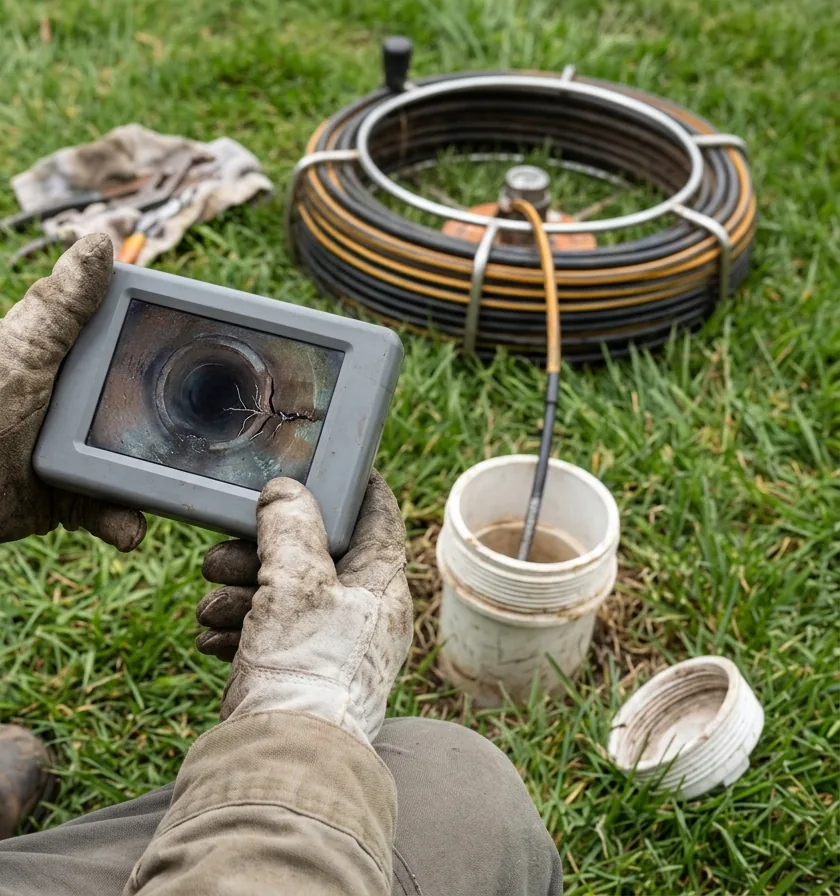
Cracks Along the Pipe
A crack is an opening roots and soil can use: MAWSS warns that roots find even the tiniest crack in a lateral, and that defective laterals can draw in enough soil to open holes in the yard. MAWSS's lateral diagram lists "breaks, cracks, holes" among the defects its tests find. One cracked length in good pipe can be cut out and replaced; Bob Vila's guide puts the average cracked-pipe repair at $1,050. See sewer line spot repair for the methods.
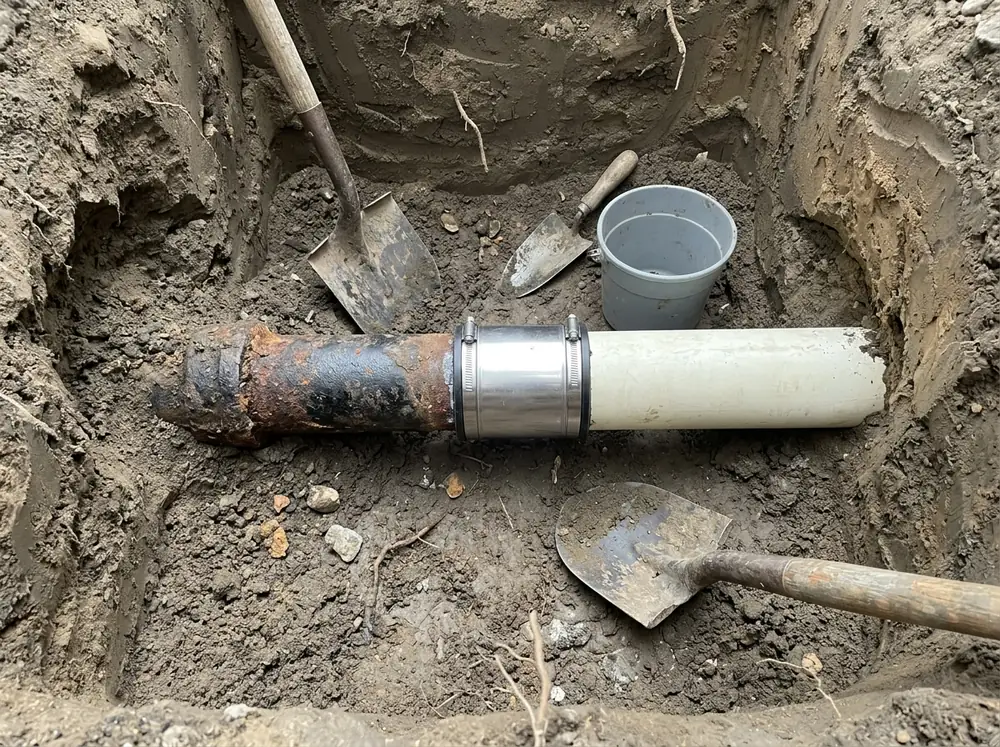
Failed Hub Joints and Iron-to-PVC Transitions
Cast iron sewer pipe comes as hub-and-spigot pipe or hubless pipe, and a repair or partial replacement always ends at a joint between old iron and new pipe. The 2021 plumbing code allows plastic-to-iron hub joints only as a caulked joint or a mechanical compression joint, and couplings for hubless iron need a rubber sleeve inside a metal shield. Ask which coupling the quote uses at each end of the new pipe.
Iron Under the House and Iron in the Yard
Cast iron under a slab is covered on under-slab sewer line replacement. In a crawl space the pipe hangs in the open, and the code limits hangers on cast iron to every 5 feet (10 feet where 10-foot lengths are used). The yard run out to the property line or curb is the owner's private lateral.
Replacing Cast Iron in Kind or in PVC
Both cast iron and PVC sewer pipe are on the code's approved list. This Old House gives PVC more than 100 years and says buyers pick iron for durability or quiet. On price the gap is wide: Bob Vila puts pipe for 48 feet at $1,104 to $3,600 in iron against $73 to $376 in PVC. Whether a trenchless method suits a given iron run is a question for the camera video; see pipe bursting for the code's limits.
Why Mobile homeowners, landlords and businesses call Mobile Sewer Line Replacement
- One licensed plumber gets the request, not a bidding list
- No charge to you for the introduction
- Ask to keep the camera video from before and after
- Alabama plumbing licenses can be checked online
What Changes the Price of a Cast Iron Sewer Job
How much of the run is bad
HomeGuide says partial repairs often cover 1 to 15 feet, while a full line is usually around 40.Where the iron is
Pipe under a slab costs far more to reach than pipe in open yard; under-slab sewer line replacement has those figures.The new material
Choosing cast iron again multiplies the pipe cost several times over PVC.Concrete on top
Bob Vila averages $1,750 to repair a driveway and $1,400 for a patio or walkway after sewer work.
Ask for a written quote that lists the footage being replaced, the pipe type and the couplings at each end, and keep the camera video so you can compare bids on the same defects.